About Me

Brad Holem

Creative Director · Founder, Monocled Moose Studios · Brand & Content Strategy

Kabankalan City, Philippines bwholem@gmail.com
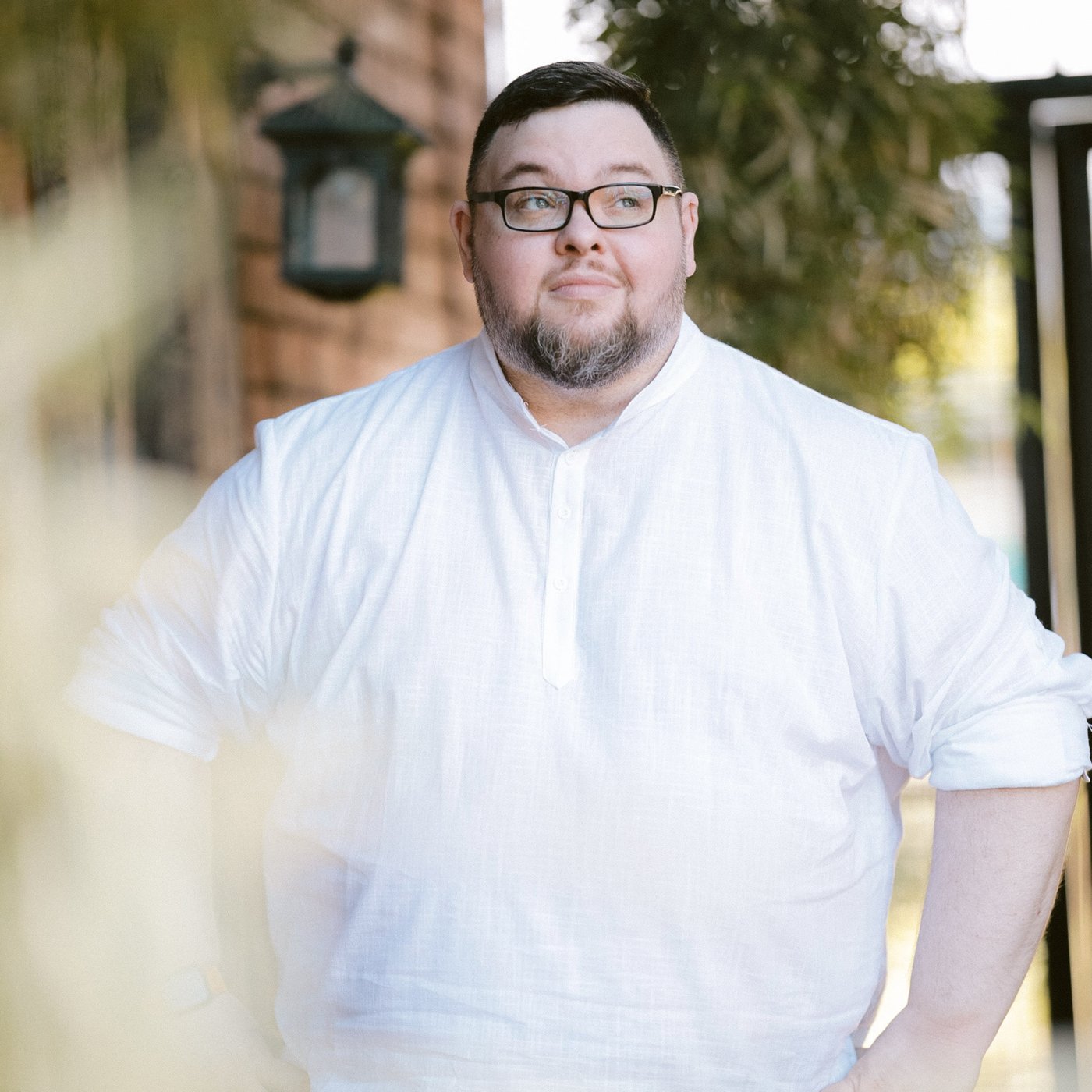
Portrait of Brad Holem
Brad Holem Founder, Monocled Moose Studios

Brand & Creative Strategy — Case Studies

Brand builder and strategist with 20+ years across agency, institutional, and owner-operator marketing. I’ve repositioned brands, translated complicated changes into clear stories, and built successful creative based on metrics and strategic thinking. These are real stories of how I effected change in the positions I was in.

Case 01·Zaycoland Resort & Hotel

Repositioning the market leader and eliminating its low season

Marketing Consultant, via Kabankalan Printing Press · Kabankalan, Philippines · 2013–2017

The insight

You can’t advertise your way out of “too exclusive.” You have to demonstrate openness and physically put anyone and everyone inside the gates.

The situation

Zaycoland was the market-leading resort in Kabankalan, but growth had stalled and revenue dipped every rainy season. The property’s core problem was perception: the Zayco name carried elite, high-society associations. Everyone knew the resort but ordinary families quietly assumed it wasn’t for them.

What I did

My solution was event-based. Every event was designed to do double duty. They were aimed at being a brand repositioning tool and a direct sales pipeline all at once, priced for that purpose rather than for event-night profit. I rebranded the property with clearly separated Hotel, Restaurant, and Events lines, backed by a distributed brand guide so every stakeholder executed consistently. Then I built an event engine around deliberate break-even pricing, minimizing the marketing dollars needed to support the efforts.

For families: Halloween and Easter children’s events priced to break even, designed as trial experiences for the exact customers who book birthdays, reunions, and Christmas events. Attending families were captured into a database, and the twice-yearly events became standing reminders.

For the January fiesta: instead of the hotel’s usual upscale wine events that catered only to an elite few while the entire town partied at the plaza, I brought in sponsors and turned the pool area into a foam party with a live DJ, priced at nearly plaza-level entry with a beer included. Year one broke even and packed the property. Year two, established as the town’s after-party destination, we raised prices modestly: same crowd, real profit.

Behind the events, I retrained the sales team around monthly personal contact with final decision-makers, selling value over price, with reporting and mentorship to keep the pipeline honest.

The result

~2×

Family event bookings — birthdays, reunions, Christmas parties — roughly doubled over two years.

40% → normal

The rainy-season revenue dip shrank to ~25% in year one and equalized to normal monthly variance within three years.

No single tactic did it: the repositioned brand widened who considered the property, the events physically demonstrated it, the database turned attendees into a bookings pipeline, and the retrained sales team converted it. Zaycoland held its market-leader position while shedding the perception that had been quietly capping its growth.

Case 02·Interline Creative Group

Surviving the loss of 75% of revenue — by building what we’d pitch next

Director of Marketing Technology · B2B industrial agency, Chicago · 2001–2013

The insight

We couldn’t out-relationship the agencies circling the account. But we had just enough time to convert what we knew into what we’d sell next. My boss/mentor always said… Adapt or die.

The situation

Interline was a 15-person industrial B2B agency outside Chicago whose largest client, a century-old manufacturer, represented roughly 75% of revenue. The glue that held our small team to theirs was a decades-long friendship between our founder and their ownership and C-suite. When their founder retired and the next generation took over, everyone could see what was coming. We had a death sentence with a long fuse.

What I did

We held two assets no competitor could replicate quickly: decades of accumulated product knowledge, and the digital and social capabilities I’d been building while the industry’s agencies were still print-first. I joined Interline as webmaster and in-house IT, and over the decade built the agency’s digital service line. We used that capability to help add revenue from our existing clients and increase our value to new ones, all of which helped us survive. Concretely:

Crisis infrastructure: when one manufacturer faced a national product recall, I built and ran the response site. Customers entered a product number, recalled units were flagged, and verified contact data was batched directly to the client’s support team for callbacks.

Market-entry social: I ran the social content calendar for Geberit’s North American launch as the brand entered the US market.

Authority building: monthly outward-facing webinars and trade-show speaking that positioned a tiny industrial agency as a digital voice in a print-first industry.

New business on the floor: at KBIS and High Point Market, shows where we were often the only agency present, I ran live social campaigns, piggybacking show hashtags with daily giveaways that drove traffic to our seminars, several times a day.

The telling detail: even after the anchor client moved its account, the winning agency still relied on us for their website relaunch. We were asked to build the product database powering it, because we knew the product line piece by piece and they didn’t. We kept earning revenue from an account we’d “lost.”

The result

75% replaced

Over roughly five years (2005–2010), the agency replaced three quarters of its revenue with new and expanded business.

15 → 20 staff

Headcount grew through the transition. No collapse, no layoffs.

An agency built on a single relationship became an agency carried by its capabilities — digital services, product expertise, and a presence in the industry’s key rooms. The team was the key, and I was proud to be an influential part of it. I stayed another three years after the transition before relocating overseas.

Case 03·Spanishtown Cantina & Bakery

One kitchen, every revenue stream it could carry

Owner-Operator · Kabankalan, Philippines · 2016–present

The insight

The retail was never the full business. The kitchen was the business and when two channels died, we didn’t rebuild. We re-aimed the kitchen.

The situation

Spanishtown began baking in 2016 and opened its retail doors in 2017: a three-table coffee and cake shop with one cold kitchen and a small team. The constraint was obvious. A shop our size can’t survive on foot traffic alone. Then in 2020, COVID took away most of the foot traffic anyway, and the events business with it.

What I did — building the portfolio

Three revenue streams off the same kitchen, talent, and ingredients. The retail café was the base. Event cakes were the margin driver, capable of adding roughly 10–20% to a month’s revenue on top of the café, supported by a 30-page full-color sales book that taught clients how cakes are priced and portioned, turning every consultation into a structured budget conversation. I put our cakes inside local event planners’ wedding packages, with bonuses for their sales staff on inclusions. Their sales team became our sales team. Third, private-label wholesale: unique desserts developed per restaurant, no overlap between clients, no branding traceable back to us. We became invisible suppliers to our own market.

What I did — the pivot

Events and dine-in slowed in 2020; we never closed. We were among the first local businesses onto the food delivery app when they entered the market. We trained our staff and added items like specialty breads, staples people buy weekly, versus treats they buy for occasions. We opened out-of-town sales with a weekly delivery run: one route north, every town along the way, orders collected all week. We increased social output to keep our small name visible.

The result

0

Loans taken, closures, or missed payrolls — through the entire pandemic.

Still operating

Survival came from redeployment, not rescue. The business remains open today.

It wasn’t one tactic. The diversified base meant losing two channels wasn’t fatal; the pivot meant the remaining capacity never sat idle. Small levers, working together.

Case 04·Southland College

Getting ahead of a market disruption

VP of Marketing, Communications & Technology · Kabankalan, Philippines · 2013–2015

The insight

Becoming the institution that didn’t just react but the one that explains the change allowed families to trust us with their kids’ futures. Being the expert became a recruitment channel.

The situation

Southland was a growing private college in a crowded market. Their main pitch was new facilities including computer labs and air-conditioned lecture halls. When I joined, the Philippines was implementing K-to-12: a government-mandated restructuring that added grades 11 and 12 nationwide, introduced entirely new senior-high tracks, and would delay every incoming college freshman by two years. A major disruption to every aspect of the school. Every school in the country faced the same disruption. Most planned to react to it. We decided to lead through it.

What I did

Students don’t choose colleges because of computer labs; they choose futures. So, I rebuilt the school-visit program around futures, not features: presentations pairing the country’s top-paying careers with the degrees they require and Southland’s programs and scholarships that get students there. The facilities were still important but demoted to supporting sizzle. I delivered them personally across public and private schools, using my own conspicuousness as a foreigner at the front of a provincial classroom as the memory hook. Students might forget a brochure; nobody forgot the big American who asked what they wanted from their future.

For K-to-12, I ran the communication strategy ahead of the transition: breaking down the new senior-high strands (ABM, STEM, HUMSS, and Tech-Voc) for students, parents, and our own stakeholders, through school visits, main-campus open houses, and parent seminars in towns beyond Kabankalan. The goal was to position Southland as the region’s expert through the change, not one more institution scrambling to respond to it.

I also created the institutional brand identity used across all of it.

The result

10–12%

School-wide enrollment growth across two admission cycles, passing 2,000 students by 2015.

Still in use

“Be a Southlander, Be Empowered” — the institutional brand and tagline I created is still in use today, nearly a decade later.

When the K-to-12 transition arrived, the region’s families already knew what it meant and they knew which institution had taught them.

Creative Practice

The craft behind the strategy

Strategy without craft is just slideware. Alongside the case studies, I run Monocled Moose Studios, an independent studio publishing tabletop RPG books and developing video games. Two titles are live on DriveThruRPG (Odin’s Own and Mr. Wonderful’s Traveling Circus), a full catalog of print and digital titles is mid-run, and a Steam videogame demo is in development.

Before the studio, I spent three-plus years as Game Master and showrunner of The Kingdoms of Tribus — a live-play D&D campaign spanning 50+ episodes plus a 7-episode companion series, streamed live on Twitch, edited for YouTube, with live play audio dramas on the side. Weekly narrative production, sustained for years: worldbuilding, maps, lore, and improvisation against players who never went where I expected.

The studio is also where I’ve worked out my position on AI in creative work through actual production — where it accelerates, where it flattens work into template, and where my authorship line sits. I needed to live this experience firsthand and not just base my thoughts on podcasts, tweets and theory. This deep dive into the world of AI taught me how to use the tool of AI without the results being humanless. The best parts of AI are what I bring to the table, not the other way around.

Currently: founder, still doing this daily.

I run Monocled Moose Studios and Spanishtown Cantina & Bakery, which means positioning, pricing, funnels, and go-to-market aren’t things I did once at an agency. They’re what I do every week, with my own revenue on the line. If you’re looking for a creative who has operated on both the agency side and the owner side, let’s talk.